Managed Network IT Services: A Guide for Canadian SMBs
Discover how managed network IT services help Canadian SMBs improve security and uptime. Learn what is included, pricing models, and how to choose a provider.

Discover how managed network IT services help Canadian SMBs improve security and uptime. Learn what is included, pricing models, and how to choose a provider.

If your office Wi-Fi keeps dropping, cloud apps lag at the worst possible moment, and nobody can tell you who's watching the firewall after hours, you already know the problem. It's not a “network issue” in the abstract, it's an operations problem, and it's costing time, patience, and usually a lot more risk than anyone wants to admit.
That's why managed network IT services have moved from a nice-to-have to a practical operating model for Canadian SMBs. The modern buyer isn't just looking for someone to reboot a router. They need a provider that owns the network stack, keeps identity and access tight, and catches problems before staff start inventing workarounds.
Your staff can be online while the business remains exposed. A misconfigured firewall, stale user account, or poorly monitored Microsoft 365 tenant can create trouble long before anyone notices a dropped connection. If the internal team only reacts after complaints arrive, network management has already become a business risk.
Managed network IT services cover the operational layer that keeps users, systems, and sites connected securely. Canadian guidance includes internet connectivity, Wi-Fi, firewalls, switches, backups, patching, cloud administration, and support within that scope see the Canadian scoping guidance. Buyers should define that scope before comparing providers, because “network support” can mean anything from router replacement to responsibility for the company's wider digital backbone.
A capable provider monitors traffic, tunes wireless networks, maintains switches, manages secure remote access, and tracks device and service health. The work also includes Microsoft 365 administration, identity management, and layered security telemetry. Those functions belong in the conversation because access controls, sign-in activity, endpoint signals, and cloud configuration now affect network risk as directly as physical equipment.
Practical rule: Require the provider to document where network management ends, where broader IT support begins, and who owns each response.
Separate the service into connectivity, operations, security, and end-user support. Then ask what the provider monitors, which alerts trigger action, how incidents are escalated, and which tasks remain with your staff. The distinction between managed services and staff augmentation also matters when you are finding the right tech partner.
CloudOrbis provides a useful overview of the computer network services that support daily business operations. Use that infrastructure view as a baseline, then add identity, cloud administration, and security monitoring to the scope.
The right model is straightforward: your network supports applications, secure access, collaboration, and branch operations. A provider earns its fee by making those dependencies visible, maintaining them consistently, and reporting problems before they disrupt revenue-generating work.
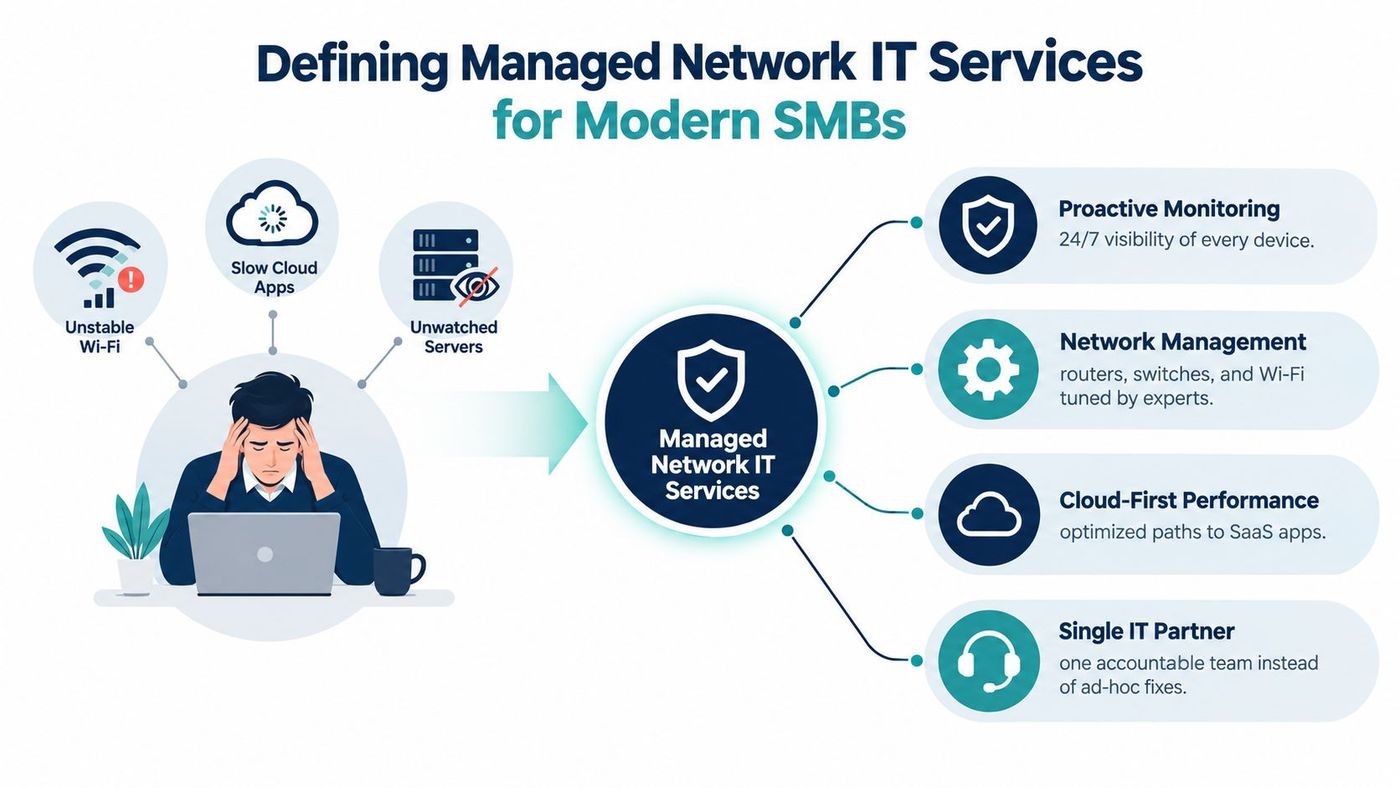
A mid-sized business can run for years with one internal generalist, several vendor logins, and a break-fix routine. That model fails when cloud applications, hybrid work, branch connectivity, identity systems, and Microsoft 365 administration all depend on the same small team. A missed configuration or delayed response can interrupt staff access long before anyone notices a failed physical device.
The market reflects that pressure. One Canada-specific estimate places the managed services market at USD 17.7 billion in 2026 and USD 28.4 billion by 2031, with a 9.9% CAGR. Cloud and platform services are projected to grow at 19.21% CAGR through 2030 Mordor Intelligence Canada IT services market analysis. A separate estimate values Canadian managed network services at USD 5,140.1 million in 2025 and USD 7,621.3 million by 2030, pointing to continued adoption of outsourced operations Credence Research market report.
Hybrid delivery creates more dependencies than an internal generalist can reliably manage alone. On-premises solutions still accounted for 55.00% of the market in 2024, while onshore delivery represented 48.50% of revenue, according to the same Canadian IT services analysis. Cloud-hosted and platform services are growing quickly, so providers must support both existing systems and newer delivery models without leaving ownership unclear.
The scope also extends beyond routers, switches, and internet circuits. A properly defined managed network service may include identity management, Microsoft 365 administration, access policies, endpoint connections, and security telemetry across multiple systems. Ask the provider to state exactly which alerts it monitors, which events trigger action, and which responsibilities remain with your employees.
Managed networks are becoming the default because operational complexity has outgrown the old break-fix habit.
Security staffing reinforces the shift. PwC Canada reported that 39% of CISOs in its 2025 Canadian Digital Trust Insights survey viewed managed cybersecurity services as one of the most effective ways to address the talent gap PwC Canada cyber managed services. That shortage is visible when an internal team lacks time to review alerts, maintain access controls, and respond consistently.
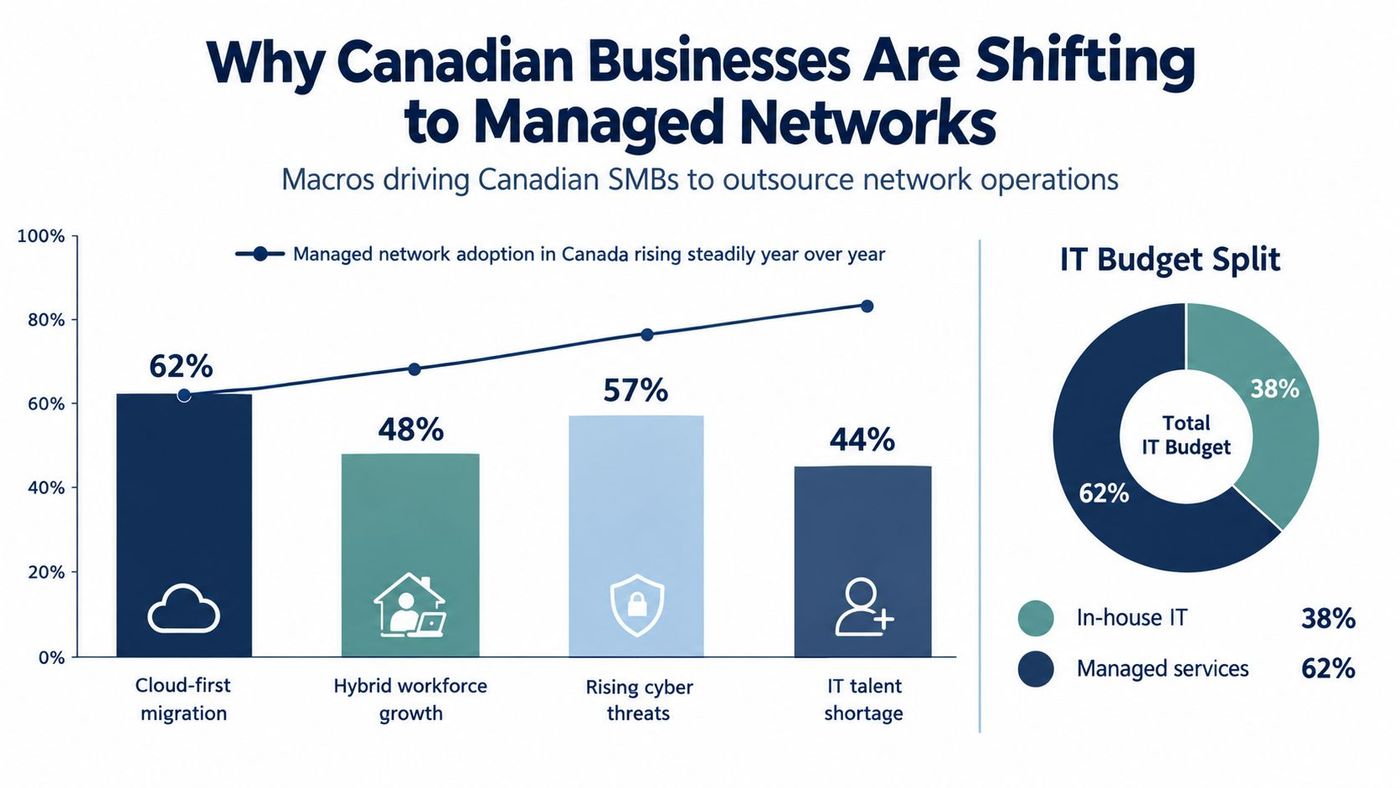
A good managed network provider should make your environment harder to breach, not just easier to administer. That starts by treating the network as a live security layer, not a static box that gets checked during annual reviews. The best providers build detection into the operating model itself.
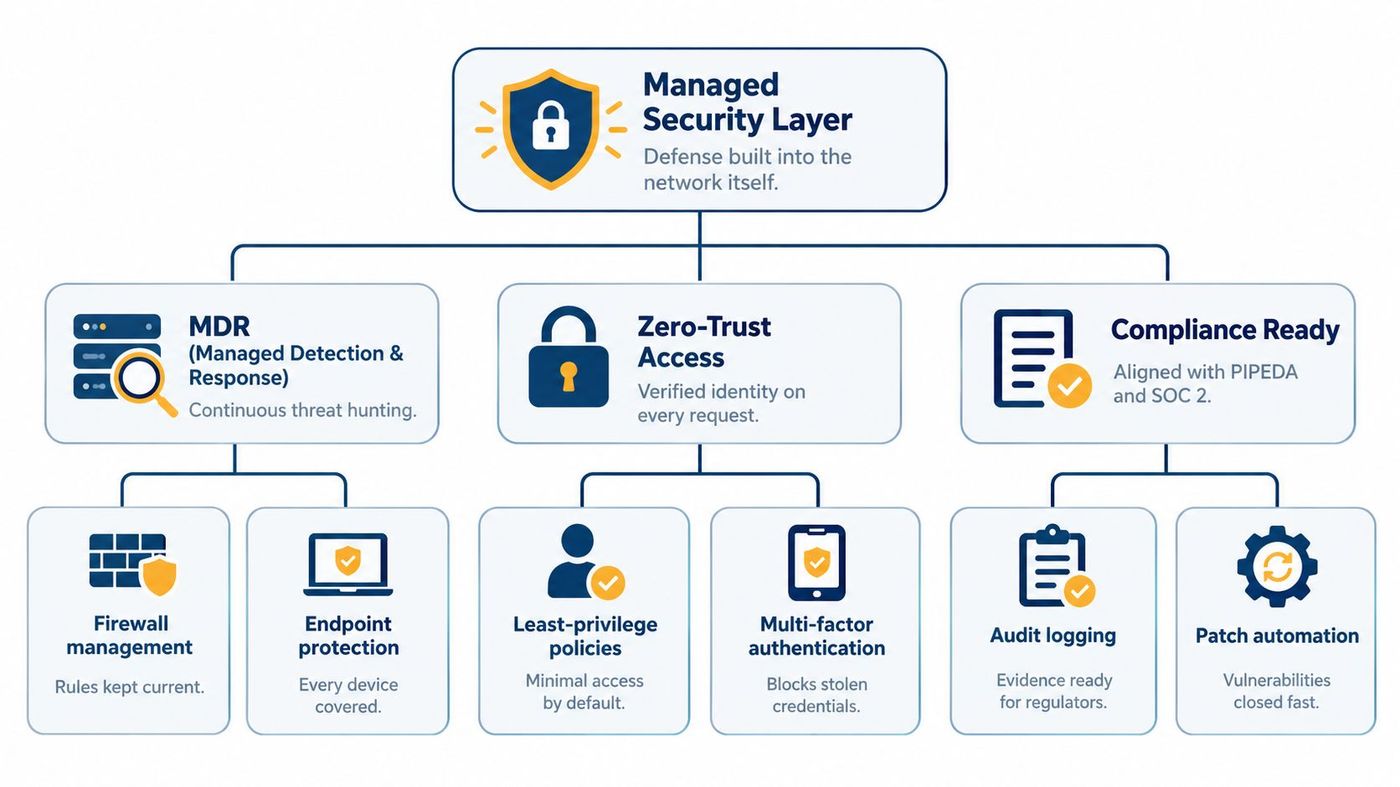
Canadian managed network services increasingly use MDR, XDR, and ITDR architecture, with controls supporting PIPEDA, HIPAA, PCI-DSS, NIST CSF, ISO 27001, and Quebec Law 25. The point is simple, detection has to span endpoint telemetry, identity events, and network alerts if you want to shorten dwell time and contain incidents faster Gibraltar Solutions. That's a very different posture from a firewall-only setup that hopes the perimeter will do all the work.
High-quality Canadian providers commonly pair network operations with layered controls like EDR on managed devices, managed firewalls, email security, MFA management, phishing simulations, and security awareness training. That's not decoration. It's how you reduce the attack paths that SMBs face, especially when staff work across offices, homes, and mobile devices Gamtech managed IT services.
For regulated organisations, the service design matters just as much as the tools. A provider that can support fast triage, 24/7 oversight, and documented controls is far more useful than a provider that only hands over compliance paperwork. If you're comparing firms, it helps to avoid penalties with this guide and then test how each vendor maps security responsibilities to actual operational tasks.
Compliance isn't a binder on a shelf. It's a daily operating discipline.
If you need a deeper look at how providers package security, CloudOrbis has a useful overview of managed IT services security. The key takeaway is blunt. A managed network should reduce exposure across email, identity, devices, and traffic flow. If it only gives you alerts after the fact, it's too late.
Most buyers don't ask the right pricing question. They ask, “What's the monthly fee?” The better question is, “What gets covered, and what happens when something goes wrong after hours?”
Managed network pricing usually falls into three patterns. Per-device pricing works when your hardware count is stable and the environment is straightforward. Per-user pricing fits organisations where staff count drives most of the support load. Tiered, all-inclusive pricing is better when you want predictable operations, bundled security, and fewer surprise invoices.
| Pricing Model | How It Works | Best For |
|---|---|---|
| Per-device | You pay based on the number of managed endpoints, network devices, or servers | Smaller environments with clear asset counts |
| Per-user | You pay per employee or named user covered by the service | Firms where support demand follows headcount |
| Tiered all-inclusive | You pay a flat monthly fee for a bundle of monitoring, support, and security services | Mid-sized businesses that want predictable OpEx and broader coverage |
The trap is obvious. A cheap monthly rate can hide exclusions for patching, emergency response, reporting, or security work. That's how break-fix support turns into budget drift, and it's why a “monitoring-only” offer often costs more in practice than it first appears.
For budgeting comparisons, CloudOrbis has a useful breakdown of managed services cost. Use that kind of reference to pressure-test what's included. If a proposal doesn't clearly spell out coverage for off-hours incidents, proactive maintenance, and escalation, the quote isn't complete.
Predictable pricing matters because network failures don't wait for a purchase order.
The right pricing model is the one that matches your risk profile. If your business depends on distributed offices, remote staff, or cloud-heavy workflows, pay for coverage, not for the illusion of savings.
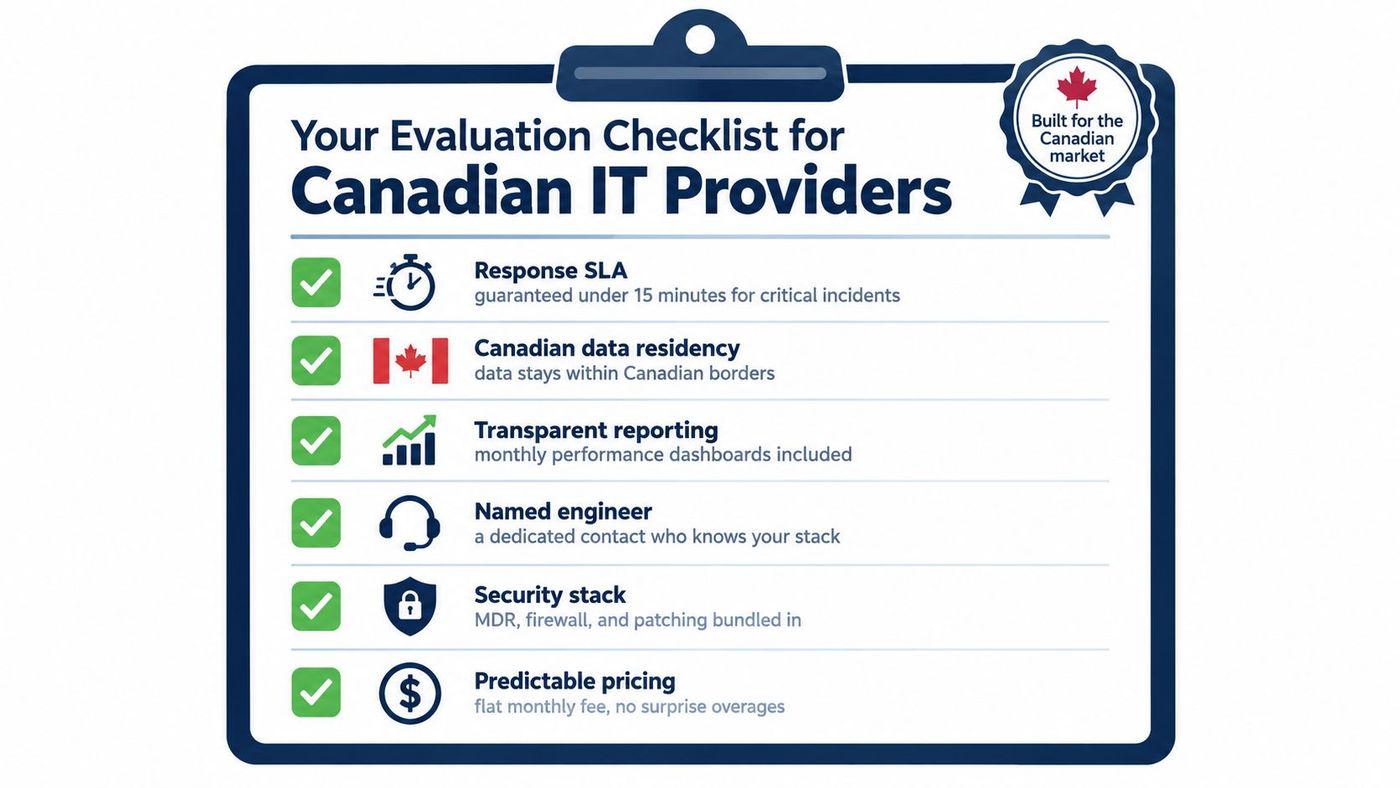
A provider's proposal should tell you who owns each operational outcome. If a switch fails, a user loses access, or a firewall rule disrupts an application, you need a named team with authority to diagnose and fix the issue, not a chain of subcontractors passing tickets around.
Start by defining the service boundary. Ask whether the provider manages Wi-Fi, firewalls, switching, identity, Microsoft 365 administration, backup testing, and remote access, or only selected components. Modern managed network services extend beyond uptime. They should connect identity controls, Microsoft 365 administration, network operations, and layered security telemetry so your team can see incidents and act on them. Vague answers signal weak accountability.
Ask the provider to explain the incident handoff path before you sign. If nobody can describe who takes control during an outage or security event, nobody clearly owns the result.
Use CloudOrbis's managed services questionnaire to structure interviews and compare answers line by line. Press for details that affect your industry, particularly in healthcare, legal, finance, and manufacturing. Request sample reports, escalation procedures, and a clear list of exclusions.
Choose the provider that demonstrates local accountability, documented escalation, and disciplined reporting. A polished proposal matters less than evidence that the team can operate your environment and show what it changed.
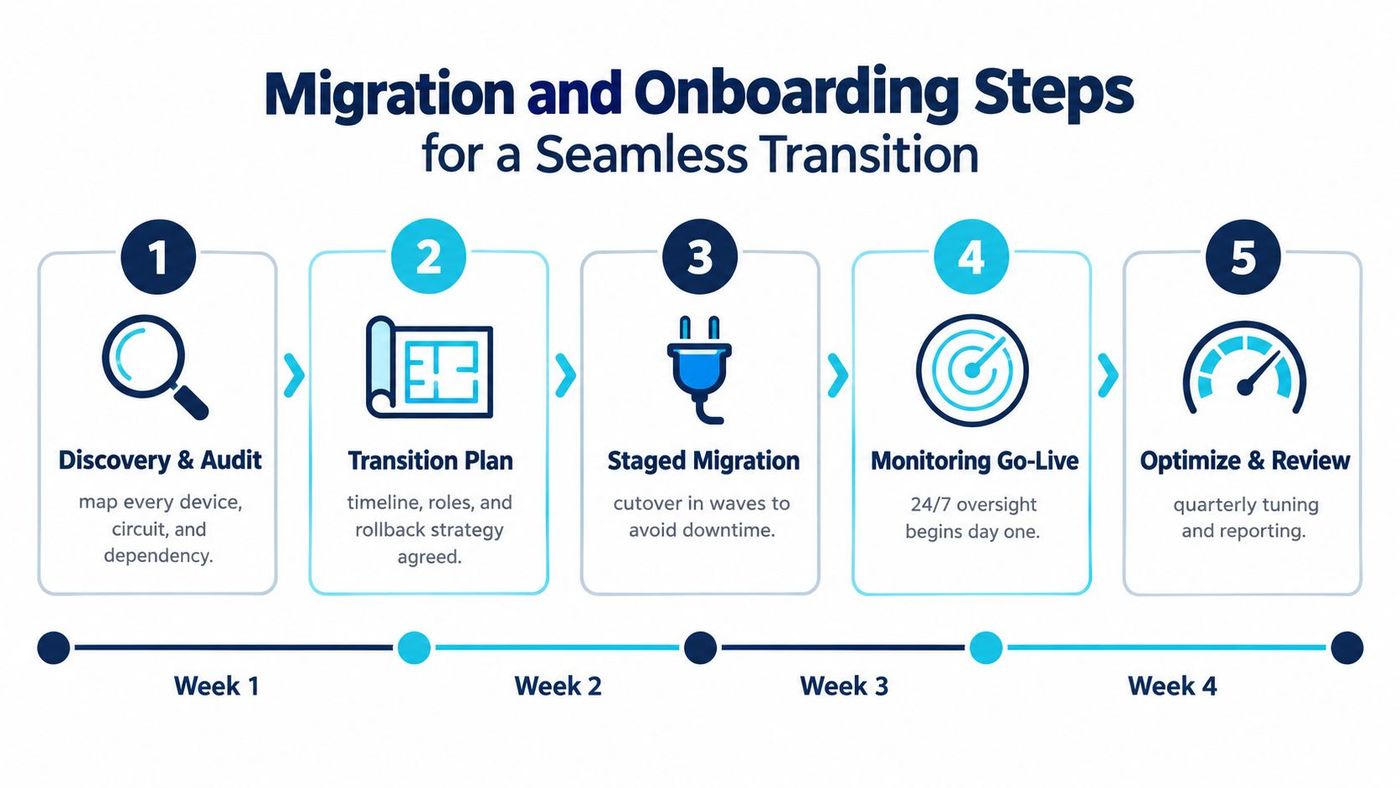
A provider switch can disrupt operations if the incoming team starts changing systems before it understands them. Treat onboarding as a controlled operations project, not a rushed handover. The work should establish visibility first, sequence changes second, and confirm ongoing ownership before the old provider exits.
Begin with a documented assessment of devices, circuits, dependencies, access paths, user identities, Microsoft 365 administration, and existing security telemetry. This scope matters because managed network IT services now extend beyond switches and firewalls. It gives the incoming provider the context to build a cutover plan instead of making decisions under pressure. Require timelines, named responsibilities, support windows, and rollback paths before approving any change.
Staff need clear instructions about what is changing, when to report an issue, and who owns the response when something behaves differently. If earlier IT changes left poor documentation, CloudOrbis's change management process provides a practical reference for reducing confusion and assigning responsibility.
The cleanest migrations feel boring to users. That's the goal.
A strong onboarding phase also establishes a new baseline for reporting and troubleshooting. Once the provider owns monitoring, your business can see whether recurring issues are being fixed or merely patched. Require evidence of resolved problems, documented changes, and stable service trends before closing the transition.
A resilient network isn't an IT line item you tolerate because the budget allows it. It's the foundation that lets your business scale without turning every new user, office, or cloud app into a fire drill. That's the business case for managed network IT services.
The upside is practical. You get tighter security, more predictable support, clearer accountability, and fewer operational surprises. You also free your internal team to work on improvements instead of firefighting the same recurring issues every month.
The wrong question is whether you can keep patching the current setup a little longer. The right question is whether your current model can support growth, remote work, and compliance without constant escalation. If the answer is no, outsourcing the network isn't surrendering control. It's buying back stability.
A managed network should give you fewer decisions under pressure.
CloudOrbis Inc. helps Canadian SMBs with managed IT support, cybersecurity, cloud services, backup and disaster recovery, and Microsoft 365 optimisation, all built around proactive monitoring and a Canada-based service model. If you want a steadier network, clearer accountability, and a provider that understands the realities of mid-sized business operations, visit CloudOrbis Inc. and start the conversation.
Book a 30-minute call with a senior engineer. No sales script, just straight answers about your environment.


